This is a list of free worksheets:
Tracing letters with 3 pictures for learning vocabularies courtesy of KidsLearningStation.com
Worksheets, activities and games cortesy of Jumpstart.com * Fun Short Stories
Worksheets for different year level courtesy of tlsbooks.com (I particularly love the fine motor worksheets and thinking skills worksheets)
Fun activities cortesy of kidsfront.com
Monday, February 4, 2013


Tuesday, October 16, 2012
Menambah Imej dalam Aplikasi Persembahan
Imej bermaksud gambar atau lukisan.
Ingin menambahkan imej ke dalam persembahan anda? Ikut langkah 1 hingga 6.
(Caranya menyalin dan menampal imej adalah sama seperti kita menyalin dan menampal teks, boleh rujuk semula nota yang telah diberikan.)
Cara mengubah kedudukan imej:
Ingin menambahkan imej ke dalam persembahan anda? Ikut langkah 1 hingga 6.
↓
2. gunakan tetikus untuk tunjuk pada gambar yang hendak disalin
↓
3. tekan butang kanan tetikus (right-click)
↓
4. tekan 'Copy' untuk menyalin
↓
5. kembali ke slaid (PowerPoint) anda
↓
6. tekan butang 'Paste' untuk menampal
(Caranya menyalin dan menampal imej adalah sama seperti kita menyalin dan menampal teks, boleh rujuk semula nota yang telah diberikan.)
Cara mengubah kedudukan imej:
 |
| Tunjuk pada gambar anda dengan tetikus, klik dan seret untuk mengubah kedudukan (tempat) gambar. |
Cara mengubah saiz dan memusing imej:
 |
| Klik pada gambar untuk mengubah saiznya. Tunjuk pada bulatan di empat bucu gambar, klik dan tarik apabila anak panah seperti atas muncul. Anda boleh juga memusing gambar itu. Mula-mula klik pada gambar, kemudian bawa tetikus ke bulatan hijau di atas gambar, klik dan pusing ke kiri atau kanan. |
Menambah Audio Pada PowerPoint
Audio bermaksud bunyi atau muzik.
Audio boleh ditambahkan ke dalam persembahan untuk menjadikannya lebih menarik.
Berikut adalah cara-cara untuk menambahkan audio ke dalam PowerPoint.
Untuk Microsoft Office 2003:
1. Klik 'Insert'.
2. Klik 'Sound'.
3. Sekarang, anda mempunyai 2 pilihan. Klik 'Sound from File' atau 'Sound from Clip Organiser'
★ Sound from File... membuka audio yang disimpan dalam komputer anda, klik 'Open', pilih 'Automatically' untuk memainkan lagu apabila slaid itu ditunjukkan atau 'When Clicked' untuk memainkan lagu apabila tetikus diklik.
★ Sound from Clip Organizer... membuka audio sedia ada yang sesuai untuk persembahan. Klik pada satu audio sahaja. Padamkan audio lama sebelum memilih yang baru.
Biasanya kita akan menggunakan 'Sound from Clip Organizer...' kerana ia pendek dan menarik.
Untuk Microsoft Office 2007 dan 2010:
Cara 1 (mudah):
Cara 2 (muzik atau lagu sendiri):
Anda mempunyai tiga pilihan.
★ Sound from File... membuka audio yang disimpan dalam komputer anda, klik 'Open', pilih 'Automatically' untuk memainkan lagu apabila slaid itu ditunjukkan atau 'When Clicked' untuk memainkan lagu apabila tetikus diklik.
★ Sound from Clip Organizer... membuka audio sedia ada yang sesuai untuk persembahan. Klik pada satu audio sahaja. Padamkan audio lama sebelum memilih yang baru.
★ Record Sound... merekod suara sendiri. Anda perlu sediakan mikrofon.
Biasanya kita akan menggunakan 'Sound from Clip Organizer...' kerana ia pendek dan menarik.
Audio boleh ditambahkan ke dalam persembahan untuk menjadikannya lebih menarik.
Berikut adalah cara-cara untuk menambahkan audio ke dalam PowerPoint.
Untuk Microsoft Office 2003:
1. Klik 'Insert'.
2. Klik 'Sound'.
3. Sekarang, anda mempunyai 2 pilihan. Klik 'Sound from File' atau 'Sound from Clip Organiser'
★ Sound from File... membuka audio yang disimpan dalam komputer anda, klik 'Open', pilih 'Automatically' untuk memainkan lagu apabila slaid itu ditunjukkan atau 'When Clicked' untuk memainkan lagu apabila tetikus diklik.
★ Sound from Clip Organizer... membuka audio sedia ada yang sesuai untuk persembahan. Klik pada satu audio sahaja. Padamkan audio lama sebelum memilih yang baru.
Biasanya kita akan menggunakan 'Sound from Clip Organizer...' kerana ia pendek dan menarik.
Untuk Microsoft Office 2007 dan 2010:
Cara 1 (mudah):
 |
| Klik pada gambar di atas untuk melihat dengan lebih jelas.
1. Klik pada 'Animations'.
2. Klik pada anak panah sebelah 'Transition Sound'.
3. Pilih dan klik salah satu pilihan dari menu.
|
Cara 2 (muzik atau lagu sendiri):
 |
| Klik pada gambar di atas untuk melihat dengan lebih jelas.
1. Klik pada 'Animations'.
2. Klik pada anak panah di bawah 'Sound'.
|
★ Sound from File... membuka audio yang disimpan dalam komputer anda, klik 'Open', pilih 'Automatically' untuk memainkan lagu apabila slaid itu ditunjukkan atau 'When Clicked' untuk memainkan lagu apabila tetikus diklik.
★ Sound from Clip Organizer... membuka audio sedia ada yang sesuai untuk persembahan. Klik pada satu audio sahaja. Padamkan audio lama sebelum memilih yang baru.
★ Record Sound... merekod suara sendiri. Anda perlu sediakan mikrofon.
 |
| Klik pada gambar di atas untuk melihat dengan lebih jelas. |
Biasanya kita akan menggunakan 'Sound from Clip Organizer...' kerana ia pendek dan menarik.
Transisi Slaid
Transisi bermaksud pergerakan atau pertukaran.
Transisi slaid boleh dilakukan dengan sangat mudah.
Untuk Microsoft Office 2003:
1. Klik 'Insert'.
2. Klik 'Slide Transitions'.
3. Klik pada anak panah untuk melihat semua transisi yang boleh dipilih.
4. Klik 'Apply'.
Untuk Microsoft Office 2007 dan 2010:
Transisi slaid boleh dilakukan dengan sangat mudah.
Untuk Microsoft Office 2003:
1. Klik 'Insert'.
2. Klik 'Slide Transitions'.
3. Klik pada anak panah untuk melihat semua transisi yang boleh dipilih.
4. Klik 'Apply'.
Untuk Microsoft Office 2007 dan 2010:
 |
| Klik pada gambar di atas untuk melihat dengan lebih jelas.
1. Klik pada 'Animations'.
2. Klik pada anak panah untuk melihat semua transisi yang boleh dipilih.
3. Tunjuk pada transisi untuk melihat hasilnya, klik pada yang hendak dipilih.
|
Friday, October 12, 2012
Bagaimana untuk menaip huruf besar?
Cara 1:
Menekan 'Caps Lock' sekali, kemudian menaip huruf-huruf di papan kekunci. Semua huruf yang ditaip akan menjadi huruf besar.
Tekan 'Caps Lock' sekali lagi apabila anda ingin menaip huruf kecil. Semua huruf yang ditaip sekarang akan menjadi huruf kecil.
Cara 2:
Tekan 'Shift' sambil menekan huruf yang anda ingin jadikan huruf besar. Lepaskan 'Shift' apabila anda ingin menaip huruf kecil.
Menekan 'Caps Lock' sekali, kemudian menaip huruf-huruf di papan kekunci. Semua huruf yang ditaip akan menjadi huruf besar.
Tekan 'Caps Lock' sekali lagi apabila anda ingin menaip huruf kecil. Semua huruf yang ditaip sekarang akan menjadi huruf kecil.
Cara 2:
Tekan 'Shift' sambil menekan huruf yang anda ingin jadikan huruf besar. Lepaskan 'Shift' apabila anda ingin menaip huruf kecil.
Tuesday, October 9, 2012
Menukar Warna dan Jenis Fon
Fon (font) bermaksud tulisan. Tulisan di dalam komputer boleh ditukar warna dan bentuknya.
Slaid anda berbentuk seperti bawah.
Cara untuk menukar jenis / bentuk fon:
Cara untuk menukar warna fon:
★ Untuk Microsoft Office 2003
→ Cara 1 (untuk isi):
→ Cara 2 (untuk tajuk):
3. Pilih dan klik pada bentuk tulisan yang ingin dipilih.
4. Taipkan tulisan atau tajuk.
5. Klik 'OK'.
6. Gunakan tetikus, klik dan seret untuk mengubah kedudukan tulisan yang dihasilkan.
★ Untuk Microsoft Office 2007 dan 2010
3. Klik pada A, B, atau D untuk menukar warna tulisan.
Slaid anda berbentuk seperti bawah.
 |
1. Klik pada kotak di atas dan taipkan tajuk slaid.
2. Klik pada kotak di bawah untuk tambah teks/ tulisan.
|
 Klik pada gambar di atas untuk melihat dengan lebih jelas. |
1. Gunakan tetikus, klik dan seret tulisan yang hendak diubah.
2. Klik pada 'Home'. (Langkah ini hanya untuk Microsoft Office PowerPoint 2010)
3. Klik pada anak panah kecil.
4. Pilih jenis tulisan (font) yang anda suka dan klik padanya. Bentuk tulisan sudah ditukar.
|
Cara untuk menukar warna fon:
★ Untuk Microsoft Office 2003
→ Cara 1 (untuk isi):
 |
1. Gunakan tetikus, klik dan seret tulisan yang hendak diubah.
2. Cari simbol seperti yang ditandakan dengan kotak berwarna kuning pada gambar di atas, klik pada anak panah untuk melihat dan memilih warna tulisan. |
 |
1. Klik pada 'Insert'.
|
 |
2. Klik pada 'WordArt'.
|
3. Pilih dan klik pada bentuk tulisan yang ingin dipilih.
4. Taipkan tulisan atau tajuk.
5. Klik 'OK'.
6. Gunakan tetikus, klik dan seret untuk mengubah kedudukan tulisan yang dihasilkan.
★ Untuk Microsoft Office 2007 dan 2010
 |
| Klik pada gambar di atas untuk melihat dengan lebih jelas.
1. Gunakan tetikus, klik dan seret tulisan yang hendak diubah.
2. Klik pada 'Format'.
|
 |
| Klik pada gambar di atas untuk melihat dengan lebih jelas.
A → Klik pada anak panah untuk melihat corak-corak tulisan yang boleh dipilih. Klik pada corak yang anda ingin pilih.
B → Klik pada anak panah untuk melihat dan memilih warna tulisan yang ada.
C → Klik pada anak panah untuk melihat dan memilih warna garisan tulisan yang ada.
D → Klik pada anak panah untuk melihat dan memilih jenis kesan dan bayang-bayang yang ada. Gunakan 'Shadow', 'Reflection', atau 'Glow'.
* A dan D biasanya digunakan untuk tajuk.
* B biasanya digunakan untuk isi.
* C biasanya tidak digunakan.
|
Menukar Latar Belakang Aplikasi Persembahan
Cara untuk menukar latar belakang Microsoft Office PowerPoint 2007:
★ Untuk Microsoft Office PowerPoint 2007:1. Klik pada 'Design'.
2. Cuba klik pada butang-butang (ditanda dalam kotak berwarna merah pada gambar di bawah) untuk melihat kesannya.
 |
| Klik pada gambar di atas untuk melihat dengan lebih jelas. |
Jangan lupa, anda perlu ada sekurang-kurangnya 2 jenis latar belakang yang berlainan di dalam persembahan anda.
Monday, October 8, 2012
Membuka Aplikasi Persembahan & Menambah Slaid
Cara untuk membuka aplikasi persembahan (contohnya Microsoft Office PowerPoint):
Cara-cara untuk menambah slaid:
★ Untuk Microsoft Office PowerPoint 2003:
1. Klik pada 'Insert'.
2. Klik pada 'New Slide'.
★ Untuk Microsoft Office PowerPoint 2007 atau 2010: 1. Klik pada 'Home'.
2. Klik pada 'New Slide'.

1. gunakan tetikus, tunjuk dan klik pada 'Start'
↓
2. tunjuk dan klik pada 'All Programs'
↓
3. tunjuk dan klik pada 'Microsoft Office'
↓
4. tunjuk dan klik pada 'Microsoft Office PowerPoint'
Cara-cara untuk menambah slaid:
★ Untuk Microsoft Office PowerPoint 2003:
1. Klik pada 'Insert'.
2. Klik pada 'New Slide'.
★ Untuk Microsoft Office PowerPoint 2007 atau 2010: 1. Klik pada 'Home'.
2. Klik pada 'New Slide'.
 |
| Klik pada gambar di atas untuk melihat dengan lebih jelas. |
Rangka Persembahan Anda (untuk rujukan sahaja):
Slaid 1: Tajuk Persembahan (Tumbesaran Berudu) dan nama anda, kelas anda...
Slaid 2: Hari Pertama
Slaid 3: Hari Ke-2
contoh:

Slaid 4: Hari Ke-3
Slaid 5: Hari Ke-4
Slaid 6: Hari Ke-7
Slaid 7: Hari Ke-11
Slaid 8: Hari Ke-17
Slaid 9: Hari Ke-21
Slaid 10: Hari Ke-22
Slaid 11: Hari Ke-23
Slaid 12: Ramalan / Perasaan anda dalam aktiviti ini
Slaid 13: Tamat / Sekian / Terima Kasih (boleh tambahkan gambar atau audio)
ATAU
Slaid 1: Tajuk Persembahan (Tumbesaran Berudu) dan nama anda, kelas anda...
Slaid 2: tumbesaran berudu (salin, tampal dari http://my-collectionz.blogspot.com/2012/09/tumbesaran-berudu.html dan disusun supaya muat dalam satu atau beberapa slaid; anda boleh juga gunakan jadual yang telah dipelajari)
Slaid 3: Tamat / Sekian / Terima Kasih
Monday, September 3, 2012
Tumbesaran Berudu
Murid-murid tahun 2 telah dikehendaki memerhati dan merekodkan tumbesaran berudu yang sebenar. Berikut merupakan proses tumbesaran berudu yang diperhatikan.
Pada awal pagi 24 Julai 2012, telur katak didapati di dalam kolam sekolah. Hujan lebat turun semalam. Telur katak ini nampak seperti seutas rantai manik yang panjang.
Ini adalah gambar telur katak pada hari kedua (25.7.2012). Sesetengah telur kelihatan ada bentuk berudu kecil di dalamnya.

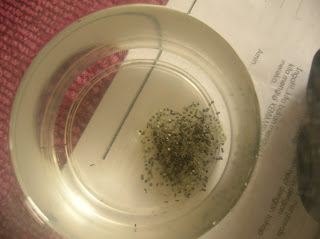
Pada hari ketiga (26.7.2012), ada telur yang telah menetas menjadi berudu. Berudu ini sebesar sebiji beras.


Pada hari keempat (27.7.2012), banyak berudu yang telah mati. Ini mungkin disebabkan tempat perlindungan yang kotor. Air perlu ditukar setiap hari.
Pada hari ke-7 (30.7.2012), berudu telah menjadi sebesar kacang merah.

Pada hari ke-11 (3.8.2012), berudu kelihatan mempunyai kaki belakang yang sangat halus.

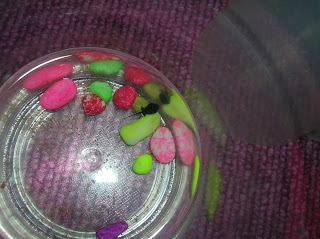

Pada hari ke-21 (13.8.2012), kaki depan berudu telah tumbuh. Ekornya kelihatan seperti bergerigi.
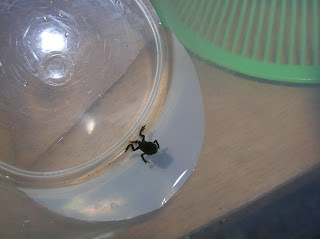
Pada hari ke-22 (14.8.2012), ekornya telah putus.


Murid-murid dikehendaki untuk membina dan membuat satu persembahan tentang tumbesaran berudu yang diperhatikan. Murid-murid mesti menggunakan aplikasi persembahan (Microsoft Office PowerPoint, Open Office Impress atau lain-lain) yang mengandungi:
* sekurang-kurangnya 2 slaid Bantuan
* teks atau tulisan yang berlainan warna Bantuan
* huruf besar dan huruf kecil Bantuan
* sekurang-kurangnya 2 jenis latar belakang (background) Bantuan
* imej atau gambar Bantuan
* audio atau bunyi Bantuan
* transisi slaid Bantuan
Tarikh akhir untuk menghantar: 30.10.2012
Cara-cara menghantar:
1. e-mail atau
2. cetak (print) dan hantar atau
3. simpan dalam pendrive/ thumb drive dan bawa ke sekolah pada 30.10.2012.
* Jangan bawa pendrive yang terlalu mahal. Jaga pendrive anda dengan baik.
Berikut adalah contoh persembahan yang dihasilkan:
Murid-murid yang menjayakan aktiviti pengayaan ini secara langsung dan tidak langsung telah memenuhi evidens-evidens berikut:
Pada awal pagi 24 Julai 2012, telur katak didapati di dalam kolam sekolah. Hujan lebat turun semalam. Telur katak ini nampak seperti seutas rantai manik yang panjang.
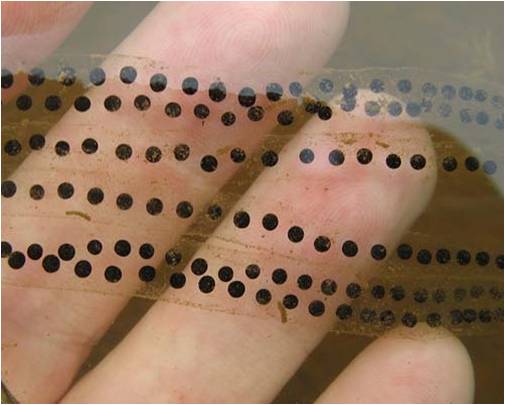 |
| Sumber gambar: http://ladydamorea.wordpress.com/2012/05/24/toad-pond-update/ |

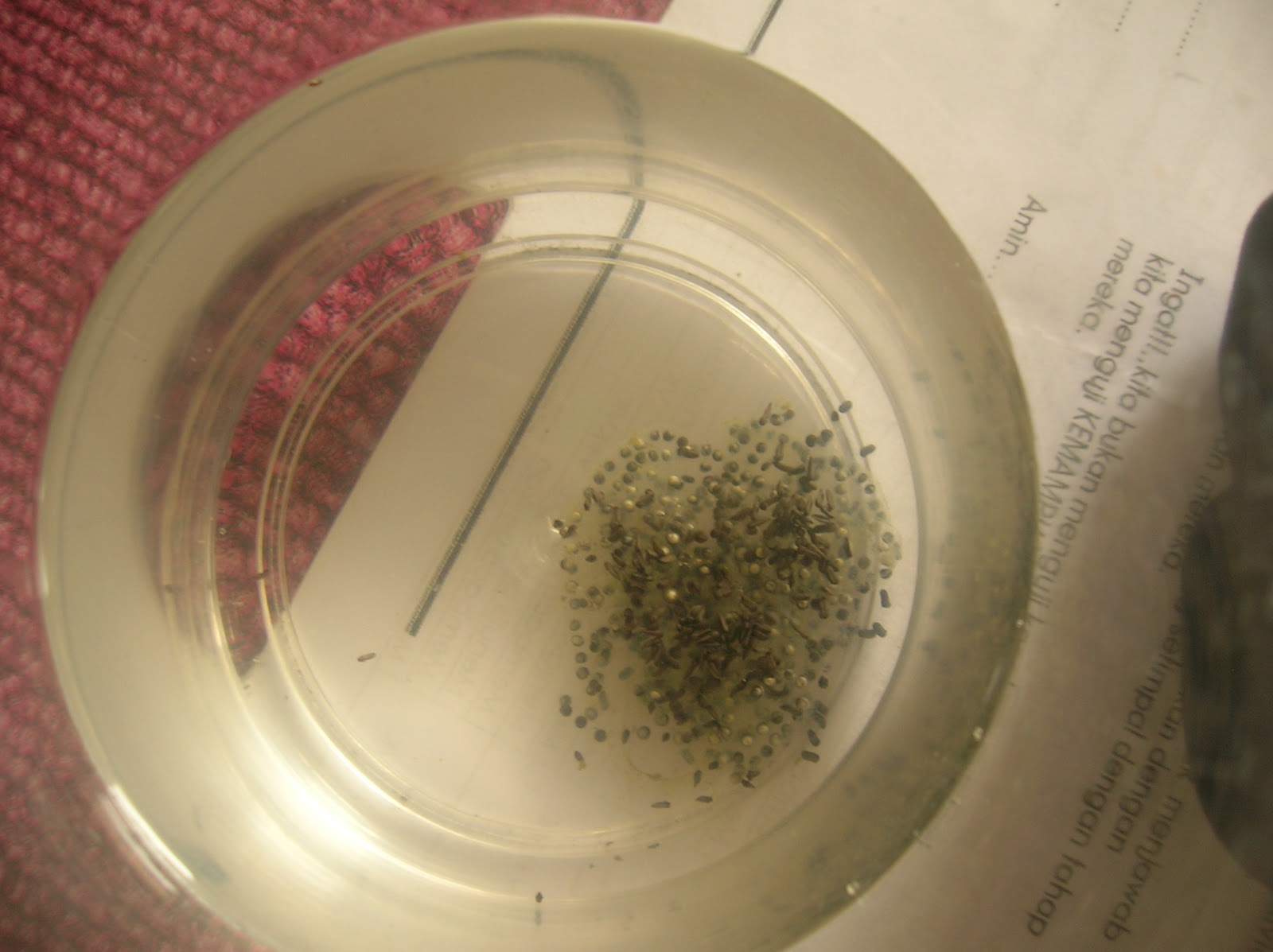
Pada hari ketiga (26.7.2012), ada telur yang telah menetas menjadi berudu. Berudu ini sebesar sebiji beras.


Pada hari keempat (27.7.2012), banyak berudu yang telah mati. Ini mungkin disebabkan tempat perlindungan yang kotor. Air perlu ditukar setiap hari.
Pada hari ke-7 (30.7.2012), berudu telah menjadi sebesar kacang merah.

Pada hari ke-11 (3.8.2012), berudu kelihatan mempunyai kaki belakang yang sangat halus.
Pada hari ke-17 (9.8.2012), kaki belakang berudu boleh dinampak dengan sangat jelas.


Pada hari ke-21 (13.8.2012), kaki depan berudu telah tumbuh. Ekornya kelihatan seperti bergerigi.

Pada hari ke-22 (14.8.2012), ekornya telah putus.

Pada hari ke-23 (15.8.2012), katak ini dilepaskan walaupun ia hanya sebesar kuku jari kelengkeng kami. Ini disebabkan kami akan bercuti selama 11 hari dan beraya mulai esok.

Bye katak~
Tugasan 3
Aktiviti Pengayaan:Murid-murid dikehendaki untuk membina dan membuat satu persembahan tentang tumbesaran berudu yang diperhatikan. Murid-murid mesti menggunakan aplikasi persembahan (Microsoft Office PowerPoint, Open Office Impress atau lain-lain) yang mengandungi:
* sekurang-kurangnya 2 slaid Bantuan
* teks atau tulisan yang berlainan warna Bantuan
* huruf besar dan huruf kecil Bantuan
* sekurang-kurangnya 2 jenis latar belakang (background) Bantuan
* imej atau gambar Bantuan
* audio atau bunyi Bantuan
* transisi slaid Bantuan
Pastikan persembahan anda memenuhi ketujuh-tujuh permintaan di atas.
Tarikh akhir untuk menghantar: 30.10.2012
Cara-cara menghantar:
1. e-mail atau
2. cetak (print) dan hantar atau
3. simpan dalam pendrive/ thumb drive dan bawa ke sekolah pada 30.10.2012.
* Jangan bawa pendrive yang terlalu mahal. Jaga pendrive anda dengan baik.
Berikut adalah contoh persembahan yang dihasilkan:
Murid-murid yang menjayakan aktiviti pengayaan ini secara langsung dan tidak langsung telah memenuhi evidens-evidens berikut:
* B2D1E1 - memilih dan menukar latar belakang dalam perisian persembahan pada slaid;
B2D2E2 - menggunakan kekunci Caps Lock dan Shift dalam perisian aplikasi;
B3D3E1 - menaip teks dan menukar warna fon dengan menggunakan pemproses kata atau perisian persembahan;
* B3D4E1 - membina 2 slaid atau lebih dalam persembahan dengan menggunakan perisian persembahan;
* B3D4E2 - mencapai fail persembahan yang sedia ada untuk menukar transisi slaid;
B4D1E1 - menggunakan tetikus untuk klik dan seret;
B4D1E2 - menggunakan tetikus untuk menyalin dan tampal dalam perisian aplikasi;
* B5D1E1 - menghasilkan persembahan yang mengandungi elemen teks, imej dan audio dengan menggunakan perisian persembahan;
* B5D2E1 - menggunakan enjin carian untuk mencari maklumat dalam bentuk teks;
# B5D2E2 - menggunakan enjin carian untuk mencari maklumat dalam bentuk imej;
* B5D2E3 - mengekstrak, mengumpul dan menyimpan maklumat;
* B5D4E2 - mencapai hasil kerja sedia ada (Microsoft PowerPoint) dan mengubahsuai imej dan audio mengikut kesesuaian;
* B6D1E1 - menghasilkan tugasan menggunakan perisian aplikasi yang bersesuaian untuk menyampaikan idea baru; dan anda akan mencapai
# B6D1E2 setelah membentangkan tugasan anda di dalam kelas.
* B5D2E1 - menggunakan enjin carian untuk mencari maklumat dalam bentuk teks;
# B5D2E2 - menggunakan enjin carian untuk mencari maklumat dalam bentuk imej;
* B5D2E3 - mengekstrak, mengumpul dan menyimpan maklumat;
* B5D4E2 - mencapai hasil kerja sedia ada (Microsoft PowerPoint) dan mengubahsuai imej dan audio mengikut kesesuaian;
* B6D1E1 - menghasilkan tugasan menggunakan perisian aplikasi yang bersesuaian untuk menyampaikan idea baru; dan anda akan mencapai
# B6D1E2 setelah membentangkan tugasan anda di dalam kelas.
Tahniah!
Friday, September 23, 2011
Primary School Science Games & Projects
Interactive Science Games (On-line):
1. http://www.sciencekids.co.nz/gamesactivities.html *****fun
Projects:
1. Glue making http://www.sciencekids.co.nz/lessonplans/chemistry/makeglue.html
2. Plastic making http://www.sciencekids.co.nz/lessonplans/chemistry/plastic.html
1. http://www.sciencekids.co.nz/gamesactivities.html *****fun
Projects:
1. Glue making http://www.sciencekids.co.nz/lessonplans/chemistry/makeglue.html
2. Plastic making http://www.sciencekids.co.nz/lessonplans/chemistry/plastic.html
Friday, June 3, 2011
Muzik Sukan 2011
http://www.mp3fusion.net/flash/mediaplayer.swf" width="280" height="115" allowscriptaccess="always" allowfullscreen="false" flashvars="height=115&width=280&file=http://www.fileden.com/files/2009/3/7/2353957/Oranges and Lemons- Kaze No Iro March (the azumanga march).MP3&screencolor=0xFFFFFF&logo=http://www.mp3fusion.net/images/oplayer.gif&showstop=true&usefullscreen=false&showdownload=false&autostart=false&skin=http://www.mp3fusion.net/flash/controlpanel.swf"/>
MP3 Player from Free Mp3
MP3 Player from Free Mp3
Wednesday, October 20, 2010
The Planets in Our Solar System
I would suggest the following page for teachers and kids in teaching and learning about our Solar System.
1) http://www.apples4theteacher.com/starwarp2.html provides simple facts about each planet and the graphics are eye- catching;
2) http://www.kidsastronomy.com/mars.htm provides more details and suitable for advanced learners or upper primary pupils.
1) http://www.apples4theteacher.com/starwarp2.html provides simple facts about each planet and the graphics are eye- catching;
2) http://www.kidsastronomy.com/mars.htm provides more details and suitable for advanced learners or upper primary pupils.
Thursday, September 16, 2010
The Science Kitchen
The following links provide interesting and practical food Science projects:
1. http://chemistry.about.com/od/foodscienceprojects/Food_Science_Projects.htm
2. http://www.sciencebuddies.org/science-fair-projects/Intro-Cooking-Food-Science.shtml
3. http://www.thenakedscientists.com/HTML/content/kitchenscience/food/
1. http://chemistry.about.com/od/foodscienceprojects/Food_Science_Projects.htm
2. http://www.sciencebuddies.org/science-fair-projects/Intro-Cooking-Food-Science.shtml
3. http://www.thenakedscientists.com/HTML/content/kitchenscience/food/
Monday, September 14, 2009
GAME: Measuring Length & Weight
If the game does not load properly on this page, follow this link: http://www.bbc.co.uk/schools/ks2bitesize/maths/shape_space/measures/play.shtml
GAME 2:
http://www.bbc.co.uk/schools/ks2bitesize/maths/tests/measures.shtml
If the game does not load properly on this page, follow this link: http://www.bbc.co.uk/schools/ks2bitesize/maths/shape_space/measures/play.shtml
GAME 2:
http://www.bbc.co.uk/schools/ks2bitesize/maths/tests/measures.shtml
Friday, January 30, 2009
My Portable Multipurpose Solar Cooker
Welcome! This post is as part of my assignment, EDZ440 Independent study.
1.0.0 Introduction:
This project is done to fulfill the requirement of my course, EDZ440- Independent Study. It allows us to choose any area and topics that we are interested in. Further study is done on the topics chosen over the semester.
As my particular interest in conservation of environment, I studied on renewable energy—the solar energy. One of the primary demands for energy in this world is for the cooking of food. In developing countries, the major energy sources for cooking are fuel wood and agricultural residues. Generally, the primary energy sources today are fossil fuels, which supply approximately 90% of the energy consumed by people (Botkin and Keller, 2005). All other sources are considered alternatively energy and are divided into renewable energy and non-renewable energy. Non-renewable energy alternative energy sources include nuclear energy and geothermal energy. For examples, nuclear energy as a non-renewable energy source because it requires a mineral fuel mined from Earth. The geothermal energy is considered non-renewable for the most part due to heat can be extracted from the Earth. However, renewable resources are solar energy, hydro power, wind power, hydrogen produced from water, and energy derived from biomass such as crops, wood, and so forth. However, large consumption of fuel wood for cooking contributes to deforestation, desertation and global warming. One alternative that could help supplement the conventional cooking is solar cooking. Solar cooking uses solar energy as the energy source for cooking. It is widely used in developing countries or areas where solar radiation is available at a large scale and there is scarcity of cooking fuel or other energy forms.
Solar energy is a very large and unlimited source of energy. Solar energy is the sun’s energy relies on nuclear fusion, which is an atomic reaction in which the centre of atoms (nuclei) of one kind combine together to make a larger atom of a different kind. A great amount of energy released is resulted by the atoms are bashing together. The hydrogen is converted to helium in the sun, so that the solar atomic fusion four hydrogen nuclei join together to form a single helium nucleus. The total amount of solar energy reaching the Earth’s surface is tremendous. For example, on a global scale, 10 weeks of solar energy is roughly equivalent to the energy stored in all known reserves of oil, coal, and natural gas on Earth. According to Sukhatme (1996), the power from the Sun intercepted by the Earth is approximately 1.8 x 10¹¹ MW, which is very much larger than the entire commercial energy sources consumption rate on the Earth. On the other hand, according to Jackson and Lofstedt (1998), solar energy is absorbed at Earth’s surface at an average rate of 120,000 TW (1 TW equals to 1012 W), which is about 10,000 times the total global demand for energy.
Besides that, solar energy is an environmentally clean source of energy, unlike fossil fuels and nuclear power. It is also free and available abundantly in most countries of the world. These factors make solar energy one of the most promising alternative energy sources. However, there are some problems related with its use. The main problem is that it is a dilute source of energy where the solar radiation flux available even in the hottest regions on Earth is low. Consequently, large collecting areas are needed in many applications which result in excessive cost. In addition to that, its availability varies widely with the time. The variation occurs daily because of the day-night cycle and also seasonally because the Earth’s orbit around the Sun. Variations also occurs because of the local weather conditions.
Thus, the product I produced from my study is a solar cooker. As environmental conservation is concerned, the materials used are mainly recycled materials like old newspaper and boxes. There are many types of solar cookers with difference performance are produced and used by people around the world. The samples of common solar cooker can be accessed via search engines. Two generic types of cookers were identified from the initial invention of the solar cooker, namely the box-type and the solar concentration-type (Ekechukwu & Ugwuoke, 2002). However, the experiment done by Tan (2008) has proven “Hot Pot” as the best solar cooking device.
Box-type cooker is cheaper and simpler to construct and operate than the concentrator types. It is the simplest device to collect the incoming solar radiation and convert it into heat energy. Besides, the problem of tracking for the locations with high diffuse solar radiation ratios is avoided. The item to be cooked has only to be placed inside and taken out, so that with some experience, the operator does not have to spend much time under the Sun. (Sukhatme, 1996). However, the are some disadvantages such as the ineffectiveness of the base design lower the expected performance by the steam condensation on the inside surfaces which reduces the transmission of the glazing and sometimes causes corrosion of the absorber surfaces.
A concentrating cooker such as the parabolic design of the solar cooker is more efficient in sunlight reflection due to its ability to focus light on the main spot point. It is reported to be the most successful solar collector and reflector compared to others solar cooker design. Thus, this model is most commonly promoted, developed and modified for better cooking in indoor and outdoor cooking by the families and also economically produced in the industry. However, the food cooked in the concentrating cooker is spilled frequently unless a vapour tight vessel is used. Furthermore, some form of tracking is needed which adds to the cost of the device. It has been concluded that the cooker aspect ratio, reflector angle and cooker orientation are the main factors affecting the cooker performance (Amer, 2002).
3.0.0 Aim and Learning Outcomes:
3.1.0 Aim:
My personal goal to be achieved from this project is come out with a cost effective, save, durable, and portable solar cooker that can cook utilizing renewable energy.
3.2.0 Learning Outcomes:
I want students to be able to:
* learn in a fun way;
* understand the science concepts behind a solar cooker;
* appreciate and make use of renewable energies;
* design and construct a solar cooker; and
* build up the love to nature and concern on environmental issues.
4.0.0 Science behind the Project:
4.1.0 Heat
The solar cooker only needs the sun’s energy to heat the food. Heat is the energy associated with the random motions of atoms or molecules or even smaller units that compose matter. Heat causes substances to rise in temperature, fuse, evaporate, expand, or undergo various other related changes.
4.2.0 Conduction, convection and radiation
Heat can be transferred by conduction, convection and radiation. These are the three ways in which heat is transferred from one place to another. Conduction is the transfer of heat through matter, particle by particle. When heated, the molecules are move and collide with each another. As a result of the collision, the energy and momentum are exchanged and transferred from one particle to another, in effect transferring heat. Heat transfer through the movement of gases or liquids is called convection. When a non-uniform temperature exists in a fluid, the circulatory movement occurs. The warmer or less dense fluid is pushed away from the source of heat by cooler, dense matter. The energy carried by the moving fluids. For example, ocean current is formed due to convection, since the water at the equator graining more heat from the sun than water at the poles. Radiation is the transfer of heat that does not require matter in transmission. It is an energy travelling as electromagnetic waves. Therefore, there are three types of heat transferation, and all three are used to build a solar cooker.
4.3.0 The law of thermodynamics
The laws of thermodynamics are the laws to describe the system of heat energy. They encompass the idea: energy is never created or destroyed, but is converted from one form to another. At times, energy dissipates and it is hard to measure, but it never “lost”. Heat energy flows in one direction, from warmer matter to cooler, until equilibrium is achieved.
4.4.0 Limitation
The common problems associated with solar cooker design (Kuhnke, 1987; Grupp, 1990) include limitation to daytime and outdoor use during sunny weather, small capacity and slow cooking speed. Therefore, some of the problems need to overcome like an indoor institutional hybrid cookers of the type designed by Scheffler (Oehler and Scheffler, 1994; Otieno and Scheffler, 1989) have been constructed and installed. Sunlight is a “fuel” that required in solar cooking. An outdoor spot is needed for the solar cooker that is sunny for several hours and protected from the strong wind. If the day is cloudy day or at night time, the solar cookers do not function since there is no sunlight.
4.5.0 How solar cooker cook
When the sunlight reached to the surface of food insulated by thin metal pots or glass, the sunlight will convert to the heat energy and cook the food. However, there are difference of sunlight reflectance and absorbance on light surface and black surface of the body. If the body is black colour, the sunlight is more to absorb, while the light surface is more likely to reflect the sunlight. Dark surface get very hot in sunlight, whereas light surface do not. Thus, food cooks best in the dark, shallow, thin metal pots with dark, tight fitting lids to hold in heat and moisture. A transparent heat trap around the dark pot lets in sunlight, but still keeps in the heat. Usually, a clear, heat-resistant plastic bag or large inverted lass bowl or an insulated box with a glass or plastic window is required to retain the heat.
According to Njomo (1995), he stated that using glass as a solar collector cover in rural of developing countries has two major disadvantages, which as its high cost and its fragility both during transportation and in service. However, the transparent plastic covers have been used widely in these zones which are particularly polyethylene because of its widespread availability to construct moderate cost solar air heaters. Choudhury et al. (1995), Sfeir and Guarracino (1981) said it is impossible to predict the performance of a plastic covered solar collector using the classical models which assume that the transparent cover is totally opaque to infrared radiation. The hypothesis is quite correct for a glass cover but is unacceptable for some plastic covers as polyethylene which transmissivity to infrared radiations. However, Njomo (1991) stressed heat transfer model taking into account. This partial transparency of a solar collector covers towards infrared radiation. Solar collector considered by Njomo (1991), the air is passing between the plastic cover and the absorber plate in the air. There are two disadvantages of solar heater operators are the collector performance. First, highly sensitive to air leakage and it is quite difficult to obtain perfect air tightness with plastic cover which the small accidental perforations that can occur.
On the other hand, considering the high dust content of atmosphere during the dry season in tropical countries, materials used must be carefully chosen. Das and Chakraverty (1991) reported dry climate lead to the dust deposits both on the lower face of the plastic cover which is by electrostatic forces and on the lowering of the plastic cover transmittance as well as the absorber plate’s absorbance towards solar radiation. For these reasons, it seems that plastic is the best configuration to get sustainable performances to solar air cooker in tropical countries that with a confined and immobile air layer between the cover and the absorber plate and their air flow to be heated passing between the absorber plate and the bottom of the collector. Njomo (1991) neglected that the infrared absorbance of the plastic cover is no approximation has been done. So, the established radiation balances can be used for any type of transparent cover such as plastic, glass or other.
One or more reflectors are employed to bounce additional light into the solar box to increase cooking temperature. While mirrors are more reflective than simpler such as aluminium foil, the added gain is probably not worth the increased cost and fragility involved with using a mirror. The reflectors had an excellent spectacular characteristic. For example, if the aluminium foil reflectors weathered, winkle and collector dust, the reflectance will substantial reduce. The total potential design space is largely unexplored when a flat plate, concentrating and box type in approach and large variety of inventions and products (Grupp, 1922).
5.0.0 Development of Project:
5.1.0 Resources need:
The materials needed to construct solar cookers are easily available. The materials and tools are listed below:
* Unused boxes
* Old newspaper & magazine
* Microwave wrap
* Aluminium foil
* Paint
* Wasted wood
* Nail
* String * Aluminium soft drink can
* Used food container/ pot
* Scissors
* Masking tape
* Double-sided tape
* Glue
* Hammer
* Meat thermometer
5.2.0 Rationale for materials chosen:
5.2.1 The “GLAD Microwave Wrap”
The top part must be transparent allowing sunlight to goes in, easy to observe the cooking process and easy visual confirmation of when the food is cooked (colour changed). Although Tan (2008) has proven glass lid works better than oven bags, I still use microwave as it is easily available, light weight, water resistance, safe and able to stand for high temperature but not durable. I found a large piece of abandoned glass sheet but I do not use it for “My Portable Multipurpose Solar Cooker” because I could not find a way to cut it. Moreover, it should be portable (easy to carry) and glass is fragile. It breaks easily when knocked or dropped. “GLAD Microwave Wrap” is chosen from the range of microwave wraps because it is the cheapest.
5.2.2 Boxes and old news paper
Boxes and newspaper are easily obtained from the environment. Boxes are sturdy enough and easy to shape.
5.2.3 The “DIAMOND Aluminium foil”
I found unused aluminium sheet from the neighbourhood’s recycle center but aluminium foil is chosen because it is easier to be cut and shape compared to aluminium sheets as planned. Moreover, it is more suitable and easier to be fixed on the solar cooker. It is highly reflective but the reflective level will reduce as it oxidized (although it is wrapped or covered with a layer of microwave wrap). This can easily solved by adding or replacing a new piece of aluminium foil.
5.2.4 Spray paint
I have decided to paint my solar cooker by spay paint as it is easy to apply and cheaper than the Dulux Gloss Finish which I initially planned to use. I made the decision considering the cost factor.
5.3.0 Cost:
1.0.0 Introduction:
This project is done to fulfill the requirement of my course, EDZ440- Independent Study. It allows us to choose any area and topics that we are interested in. Further study is done on the topics chosen over the semester.
As my particular interest in conservation of environment, I studied on renewable energy—the solar energy. One of the primary demands for energy in this world is for the cooking of food. In developing countries, the major energy sources for cooking are fuel wood and agricultural residues. Generally, the primary energy sources today are fossil fuels, which supply approximately 90% of the energy consumed by people (Botkin and Keller, 2005). All other sources are considered alternatively energy and are divided into renewable energy and non-renewable energy. Non-renewable energy alternative energy sources include nuclear energy and geothermal energy. For examples, nuclear energy as a non-renewable energy source because it requires a mineral fuel mined from Earth. The geothermal energy is considered non-renewable for the most part due to heat can be extracted from the Earth. However, renewable resources are solar energy, hydro power, wind power, hydrogen produced from water, and energy derived from biomass such as crops, wood, and so forth. However, large consumption of fuel wood for cooking contributes to deforestation, desertation and global warming. One alternative that could help supplement the conventional cooking is solar cooking. Solar cooking uses solar energy as the energy source for cooking. It is widely used in developing countries or areas where solar radiation is available at a large scale and there is scarcity of cooking fuel or other energy forms.
Solar energy is a very large and unlimited source of energy. Solar energy is the sun’s energy relies on nuclear fusion, which is an atomic reaction in which the centre of atoms (nuclei) of one kind combine together to make a larger atom of a different kind. A great amount of energy released is resulted by the atoms are bashing together. The hydrogen is converted to helium in the sun, so that the solar atomic fusion four hydrogen nuclei join together to form a single helium nucleus. The total amount of solar energy reaching the Earth’s surface is tremendous. For example, on a global scale, 10 weeks of solar energy is roughly equivalent to the energy stored in all known reserves of oil, coal, and natural gas on Earth. According to Sukhatme (1996), the power from the Sun intercepted by the Earth is approximately 1.8 x 10¹¹ MW, which is very much larger than the entire commercial energy sources consumption rate on the Earth. On the other hand, according to Jackson and Lofstedt (1998), solar energy is absorbed at Earth’s surface at an average rate of 120,000 TW (1 TW equals to 1012 W), which is about 10,000 times the total global demand for energy.
Besides that, solar energy is an environmentally clean source of energy, unlike fossil fuels and nuclear power. It is also free and available abundantly in most countries of the world. These factors make solar energy one of the most promising alternative energy sources. However, there are some problems related with its use. The main problem is that it is a dilute source of energy where the solar radiation flux available even in the hottest regions on Earth is low. Consequently, large collecting areas are needed in many applications which result in excessive cost. In addition to that, its availability varies widely with the time. The variation occurs daily because of the day-night cycle and also seasonally because the Earth’s orbit around the Sun. Variations also occurs because of the local weather conditions.
Thus, the product I produced from my study is a solar cooker. As environmental conservation is concerned, the materials used are mainly recycled materials like old newspaper and boxes. There are many types of solar cookers with difference performance are produced and used by people around the world. The samples of common solar cooker can be accessed via search engines. Two generic types of cookers were identified from the initial invention of the solar cooker, namely the box-type and the solar concentration-type (Ekechukwu & Ugwuoke, 2002). However, the experiment done by Tan (2008) has proven “Hot Pot” as the best solar cooking device.
Box-type cooker is cheaper and simpler to construct and operate than the concentrator types. It is the simplest device to collect the incoming solar radiation and convert it into heat energy. Besides, the problem of tracking for the locations with high diffuse solar radiation ratios is avoided. The item to be cooked has only to be placed inside and taken out, so that with some experience, the operator does not have to spend much time under the Sun. (Sukhatme, 1996). However, the are some disadvantages such as the ineffectiveness of the base design lower the expected performance by the steam condensation on the inside surfaces which reduces the transmission of the glazing and sometimes causes corrosion of the absorber surfaces.
A concentrating cooker such as the parabolic design of the solar cooker is more efficient in sunlight reflection due to its ability to focus light on the main spot point. It is reported to be the most successful solar collector and reflector compared to others solar cooker design. Thus, this model is most commonly promoted, developed and modified for better cooking in indoor and outdoor cooking by the families and also economically produced in the industry. However, the food cooked in the concentrating cooker is spilled frequently unless a vapour tight vessel is used. Furthermore, some form of tracking is needed which adds to the cost of the device. It has been concluded that the cooker aspect ratio, reflector angle and cooker orientation are the main factors affecting the cooker performance (Amer, 2002).
3.0.0 Aim and Learning Outcomes:
3.1.0 Aim:
My personal goal to be achieved from this project is come out with a cost effective, save, durable, and portable solar cooker that can cook utilizing renewable energy.
3.2.0 Learning Outcomes:
I want students to be able to:
* learn in a fun way;
* understand the science concepts behind a solar cooker;
* appreciate and make use of renewable energies;
* design and construct a solar cooker; and
* build up the love to nature and concern on environmental issues.
4.0.0 Science behind the Project:
4.1.0 Heat
The solar cooker only needs the sun’s energy to heat the food. Heat is the energy associated with the random motions of atoms or molecules or even smaller units that compose matter. Heat causes substances to rise in temperature, fuse, evaporate, expand, or undergo various other related changes.
4.2.0 Conduction, convection and radiation
Heat can be transferred by conduction, convection and radiation. These are the three ways in which heat is transferred from one place to another. Conduction is the transfer of heat through matter, particle by particle. When heated, the molecules are move and collide with each another. As a result of the collision, the energy and momentum are exchanged and transferred from one particle to another, in effect transferring heat. Heat transfer through the movement of gases or liquids is called convection. When a non-uniform temperature exists in a fluid, the circulatory movement occurs. The warmer or less dense fluid is pushed away from the source of heat by cooler, dense matter. The energy carried by the moving fluids. For example, ocean current is formed due to convection, since the water at the equator graining more heat from the sun than water at the poles. Radiation is the transfer of heat that does not require matter in transmission. It is an energy travelling as electromagnetic waves. Therefore, there are three types of heat transferation, and all three are used to build a solar cooker.
4.3.0 The law of thermodynamics
The laws of thermodynamics are the laws to describe the system of heat energy. They encompass the idea: energy is never created or destroyed, but is converted from one form to another. At times, energy dissipates and it is hard to measure, but it never “lost”. Heat energy flows in one direction, from warmer matter to cooler, until equilibrium is achieved.
4.4.0 Limitation
The common problems associated with solar cooker design (Kuhnke, 1987; Grupp, 1990) include limitation to daytime and outdoor use during sunny weather, small capacity and slow cooking speed. Therefore, some of the problems need to overcome like an indoor institutional hybrid cookers of the type designed by Scheffler (Oehler and Scheffler, 1994; Otieno and Scheffler, 1989) have been constructed and installed. Sunlight is a “fuel” that required in solar cooking. An outdoor spot is needed for the solar cooker that is sunny for several hours and protected from the strong wind. If the day is cloudy day or at night time, the solar cookers do not function since there is no sunlight.
4.5.0 How solar cooker cook
When the sunlight reached to the surface of food insulated by thin metal pots or glass, the sunlight will convert to the heat energy and cook the food. However, there are difference of sunlight reflectance and absorbance on light surface and black surface of the body. If the body is black colour, the sunlight is more to absorb, while the light surface is more likely to reflect the sunlight. Dark surface get very hot in sunlight, whereas light surface do not. Thus, food cooks best in the dark, shallow, thin metal pots with dark, tight fitting lids to hold in heat and moisture. A transparent heat trap around the dark pot lets in sunlight, but still keeps in the heat. Usually, a clear, heat-resistant plastic bag or large inverted lass bowl or an insulated box with a glass or plastic window is required to retain the heat.
According to Njomo (1995), he stated that using glass as a solar collector cover in rural of developing countries has two major disadvantages, which as its high cost and its fragility both during transportation and in service. However, the transparent plastic covers have been used widely in these zones which are particularly polyethylene because of its widespread availability to construct moderate cost solar air heaters. Choudhury et al. (1995), Sfeir and Guarracino (1981) said it is impossible to predict the performance of a plastic covered solar collector using the classical models which assume that the transparent cover is totally opaque to infrared radiation. The hypothesis is quite correct for a glass cover but is unacceptable for some plastic covers as polyethylene which transmissivity to infrared radiations. However, Njomo (1991) stressed heat transfer model taking into account. This partial transparency of a solar collector covers towards infrared radiation. Solar collector considered by Njomo (1991), the air is passing between the plastic cover and the absorber plate in the air. There are two disadvantages of solar heater operators are the collector performance. First, highly sensitive to air leakage and it is quite difficult to obtain perfect air tightness with plastic cover which the small accidental perforations that can occur.
On the other hand, considering the high dust content of atmosphere during the dry season in tropical countries, materials used must be carefully chosen. Das and Chakraverty (1991) reported dry climate lead to the dust deposits both on the lower face of the plastic cover which is by electrostatic forces and on the lowering of the plastic cover transmittance as well as the absorber plate’s absorbance towards solar radiation. For these reasons, it seems that plastic is the best configuration to get sustainable performances to solar air cooker in tropical countries that with a confined and immobile air layer between the cover and the absorber plate and their air flow to be heated passing between the absorber plate and the bottom of the collector. Njomo (1991) neglected that the infrared absorbance of the plastic cover is no approximation has been done. So, the established radiation balances can be used for any type of transparent cover such as plastic, glass or other.
One or more reflectors are employed to bounce additional light into the solar box to increase cooking temperature. While mirrors are more reflective than simpler such as aluminium foil, the added gain is probably not worth the increased cost and fragility involved with using a mirror. The reflectors had an excellent spectacular characteristic. For example, if the aluminium foil reflectors weathered, winkle and collector dust, the reflectance will substantial reduce. The total potential design space is largely unexplored when a flat plate, concentrating and box type in approach and large variety of inventions and products (Grupp, 1922).
5.0.0 Development of Project:
5.1.0 Resources need:
The materials needed to construct solar cookers are easily available. The materials and tools are listed below:
* Unused boxes
* Old newspaper & magazine
* Microwave wrap
* Aluminium foil
* Paint
* Wasted wood
* Nail
* String * Aluminium soft drink can
* Used food container/ pot
* Scissors
* Masking tape
* Double-sided tape
* Glue
* Hammer
* Meat thermometer
5.2.0 Rationale for materials chosen:
5.2.1 The “GLAD Microwave Wrap”
The top part must be transparent allowing sunlight to goes in, easy to observe the cooking process and easy visual confirmation of when the food is cooked (colour changed). Although Tan (2008) has proven glass lid works better than oven bags, I still use microwave as it is easily available, light weight, water resistance, safe and able to stand for high temperature but not durable. I found a large piece of abandoned glass sheet but I do not use it for “My Portable Multipurpose Solar Cooker” because I could not find a way to cut it. Moreover, it should be portable (easy to carry) and glass is fragile. It breaks easily when knocked or dropped. “GLAD Microwave Wrap” is chosen from the range of microwave wraps because it is the cheapest.
5.2.2 Boxes and old news paper
Boxes and newspaper are easily obtained from the environment. Boxes are sturdy enough and easy to shape.
5.2.3 The “DIAMOND Aluminium foil”
I found unused aluminium sheet from the neighbourhood’s recycle center but aluminium foil is chosen because it is easier to be cut and shape compared to aluminium sheets as planned. Moreover, it is more suitable and easier to be fixed on the solar cooker. It is highly reflective but the reflective level will reduce as it oxidized (although it is wrapped or covered with a layer of microwave wrap). This can easily solved by adding or replacing a new piece of aluminium foil.
5.2.4 Spray paint
I have decided to paint my solar cooker by spay paint as it is easy to apply and cheaper than the Dulux Gloss Finish which I initially planned to use. I made the decision considering the cost factor.
5.3.0 Cost:
* Please come back for updates.
Subscribe to:
Posts (Atom)